


Why Tech Professionals Don't Need an In-Person Trainer (And What Actually Works Better)

Updated: May 13

I'm going to tell you something most personal trainers won't.
You probably don't need to train with someone in person.
And I say this as someone who has worked in some of the best gyms in Berlin, Germany, trained clients face-to-face, and built a career around coaching people physically.
But let me start from the beginning - because where I come from matters for why I believe this.
250 Euros and a One-Room Student Dorm
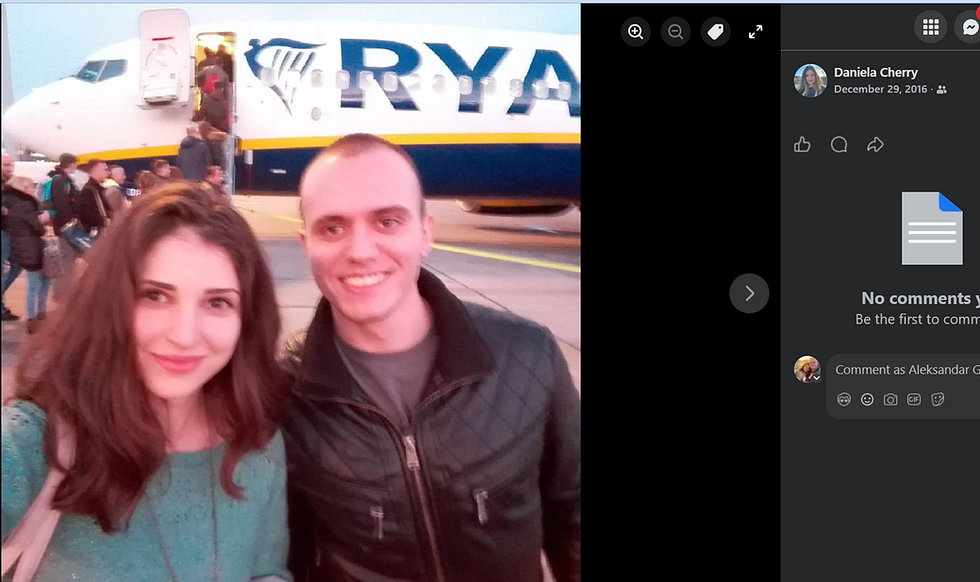
In 2016, I moved to Berlin with 250 euros in savings.
I had just finished medical college in Bulgaria - qualified as a radiologic technologist, a field I had worked in since I was 17. I paid for my own education. I knew what hustle looked like before I knew the word for it.
I moved to Germany for my then-girlfriend, now wife. She was studying. We lived in a student dormitory designed for one person. For a year and a half, I lived there without legal status - working cash-in-hand jobs for 7 euros an hour. Construction. Whatever was available.
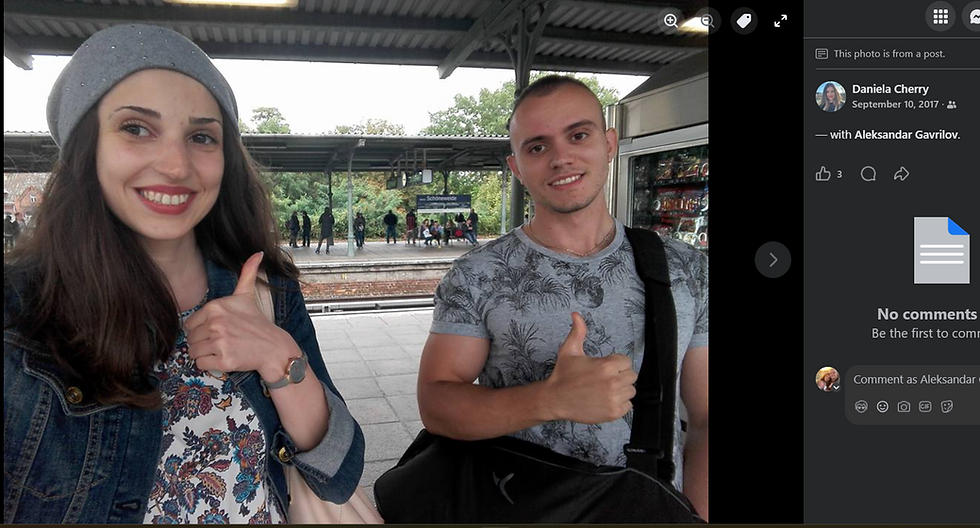
I trained through all of it. Because that's what I do. But the sessions had to be short, efficient, no gym required. Not by choice - by necessity.
I attended German classes in whatever time was left. Failed B2 three times. Passed on the fourth attempt.

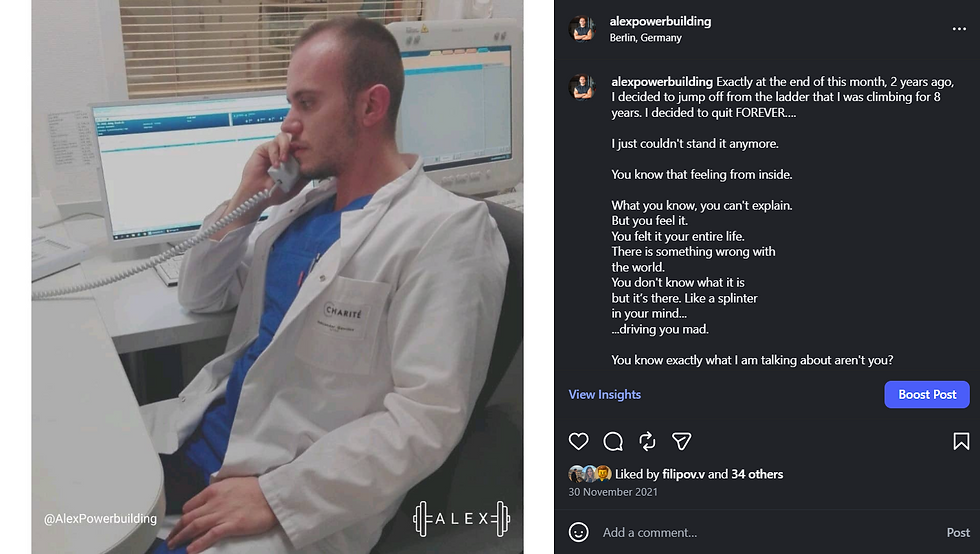
Then I walked into Charite Benjamin Franklin hospital with broken German, unrecognized Bulgarian qualifications, and asked for a job in my field. They hired me on the spot.
Night shifts.
Day shifts.
Early shifts.
On-call.
A year and a half of that.
One evening, my wife showed me a video by a Bulgarian entrepreneur talking about what business really is - and something shifted. Later on, life met me with this guy in the most random place. I realized I had always been an entrepreneur. I had just been working for someone else's system.
So I quit.
The Worst Possible Time to Become a Personal Trainer
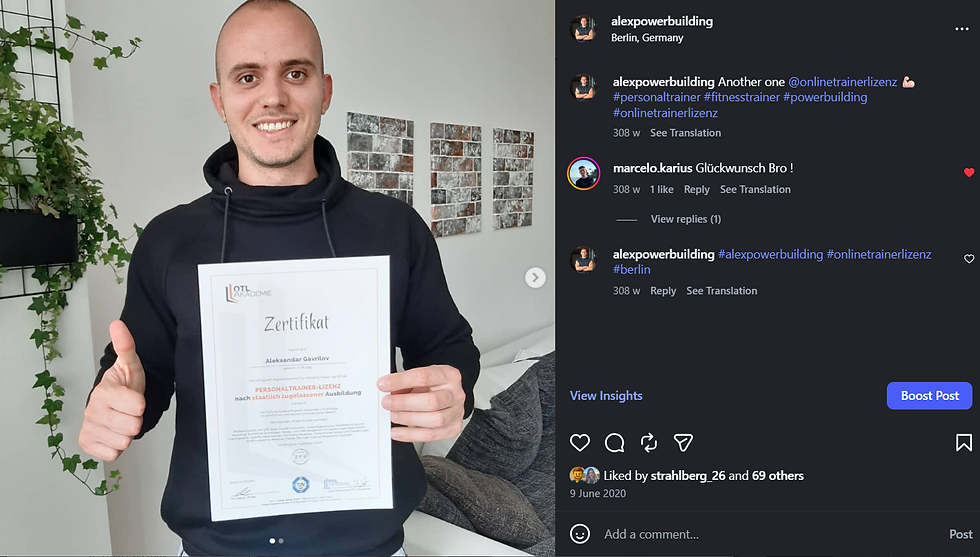
I invested everything into personal training certifications and nutrition diplomas in Berlin. Spent money I didn't have. Burned the bridges behind me the way entrepreneurs do - deliberately, so there was no going back.
Three months later, every gym in the world closed.
COVID.
I had already spent money on Google ads. I had clients lined up. I had no income and no fallback.
So I launched training sessions from the living room of our Berlin apartment.
For almost a year, that was my gym. A laptop, a camera, clients on screen, me coaching in a space roughly four meters wide.
It was not the ideal environment to start a fitness business.
It also taught me more about coaching than any gym ever did.
What the Living Room Taught Me About Online Coaching
When you train someone in person, the environment does a lot of the work for you.
The gym itself creates motivation.
The social pressure of showing up.
The equipment that makes programming easy.
The trainer standing next to you.
Remove all of that - and what's left is the actual coaching.
Does the client understand why they're doing what they're doing?
Can they execute a movement without someone physically adjusting their position?
Do they have enough intrinsic motivation to show up to a laptop screen at 7am?
Online coaching filters for the right clients and demands better coaching.
There's nowhere to hide.
When the world reopened and I went back to working in person at FitX Alexanderplatz, I saw the difference clearly from both sides.
And I understood something specific about tech professionals, software engineers, entrepreneurs, and developers - something that explains why most of them are making a mistake when they assume they need an in-person trainer.
Why Tech Professionals Specifically Don't Need In-Person Training
The scheduling problem.
In-person training requires you to be in a specific place at a specific time, every week, indefinitely.
For a software engineer with unpredictable sprint cycles, production incidents, and meetings that expand to fill whatever time is available - this is a structural incompatibility.
You will miss sessions.
You will feel guilty.
You will cancel and reschedule until the friction kills the habit entirely.
Online coaching removes the location constraint entirely. The session happens wherever you are - home, hotel, office gym, living room. The time is flexible within agreed windows.
A production incident doesn't mean a missed session. It means a rescheduled one.
The cognitive load problem.
Getting to a gym after a 10-hour day of deep focus work requires a transition that costs more than most people account for.
Changing clothes, commuting, finding parking, navigating a busy gym floor at 6pm - this is not nothing for someone who has already depleted their decision-making capacity.
Home training eliminates this entirely.
The barrier to entry is almost zero.
When the barrier is almost zero, consistency follows.
The accountability structure is different - and better.
In-person trainers provide accountability through presence. You show up because someone is waiting for you.
But this creates a dependency that doesn't transfer. The moment the trainer isn't there - travel, illness, moving cities - the habit collapses because it was built on external structure rather than internal system.
Online coaching, done correctly, builds the internal system. The client learns to train independently, understands why they're doing what they're doing, and develops the habit as their own rather than as a response to someone else's presence.
This is exactly how the best software engineers approach technical skills - not by depending on someone to walk them through every problem, but by building the understanding that makes them self-sufficient.
The data and continuity problem.
When you train in person across multiple locations - or when life moves you to a different city or country - you start over. New trainer, new approach, new relationship to rebuild.
Online coaching travels with you. The program, the history, the communication, the relationship - all of it is continuous regardless of where you are in the world. For tech professionals who work remotely, travel frequently, or relocate for work, this is not a minor advantage.
There Is No Ideal Environment for Starting
This is the thing the living room taught me that I didn't expect.
I launched a fitness business during a global pandemic from a four-meter-wide apartment with no equipment and no certainty. It was objectively terrible timing and terrible conditions.
It worked - not despite the conditions, but partly because of them. The constraints forced clarity about what actually mattered.
I see the same thing with fitness clients who wait for the right moment to start.
The right gym.
The right schedule.
The right season of life.
The right equipment.
None of it arrives.
The software engineer who starts training at home, twice a week, with a set of resistance bands and a 28-minute program, will be in significantly better shape in 12 months than the one who waits for the perfect conditions to join the perfect gym with the perfect trainer.
There is no ideal environment for starting.
There is only starting.
What Online Coaching for Tech Professionals Actually Looks Like
One check-in call per month - 30-45 minutes. We review progress, adjust the program, address what's not working.
A training program delivered through an app on your phone. Session A and Session B, 28-35 minutes each, twice a week. No gym required unless you want one.
Nutrition course built around your actual eating patterns - not a meal plan you'll follow for two weeks and abandon, but a set of defaults that work within your existing life.
Async communication between calls - questions answered within 24 hours, form checks via video, adjustments made as life changes.
The entire relationship fits within the constraints of a demanding career. It doesn't require a fixed location, a fixed schedule, or a commute.
And because it's built around understanding rather than presence, it continues to work when I'm not watching.
Why I'm Telling You This
I moved to Berlin with 250 euros.
I worked illegally for 7 euros an hour.
I failed a language exam three times.
I launched a fitness business three months before a global lockdown closed every gym on earth.
None of those were ideal conditions.
All of them were the actual conditions.
The lesson I took from all of it is the same lesson I try to give every client I work with:
You don't need the ideal environment. You need to start with what you have, where you are, right now.
For most tech professionals, that means online. Two sessions a week. A coach who understands how your work actually operates.
Not perfect. Just consistent.
I work 1:1 online with software engineers, developers, tech leads, and entrepreneurs who want to build fitness that fits their actual life - not a theoretical one. If you're ready to start with what you have, book a free 30-minute call. No pitch. Just a conversation.


Comments