


Why Fitness Matters for Software Engineers in the Age of AI

Updated: Jun 10

There's a conversation happening in tech right now about AI tools - which ones to use, how to learn them, how to stay ahead. Everyone is scrambling to keep up.
I want to offer a different perspective.
You probably already know - you cannot out-learn AI tools. The pace at which they're improving is not something any human can match. By the time you've mastered a tool, it's been replaced by something better. This is not pessimism - it's just the reality of exponential development.
But here's what AI cannot replace, automate, or make irrelevant:
Your body. Your physical capability. Your fitness.
Being fit is the one asset that remains relevant everywhere - online and offline, in every economy, at every stage of your career, in every version of the future.
The Tool That Doesn't Deprecate

I've been thinking about this differently since my wife and I bought an old house in the countryside.
We didn't buy a renovated property. We bought something that needed everything - plumbing, electrical wiring, concrete columns with reinforcement bars, structural work from the ground up. I became a plumber, an electrician, a builder. Not metaphorically. Literally.
There were days I pushed myself to the edge of complete exhaustion. Days where my body was doing things I had no formal training for, carrying loads I had no business carrying, working hours that would have broken someone who hadn't spent years building physical trust with their body.
And here's what I noticed: I never once stopped to ask myself "can I physically do this?"
I just did it.
That question - can I do this physically? - simply didn't exist for me. Not because I'm special. But because I had spent years building a body I could trust. Years of training, consistency, and developing the kind of physical confidence that doesn't disappear when the task gets hard.
That feeling - of being so capable that capability itself stops being a question - is indescribable.
The Question Most People Can't Answer

One day, mid-project, covered in concrete dust, I thought about something.
How many people can't bend down to tie their shoes?
Not because of injury. Not because of age. But because of years of sitting - at a desk, in meetings, on calls - slowly losing the range of motion, the strength, the basic physical function that the human body was designed for.
I've seen it in the tech professionals I work with. Highly intelligent people. Successful people. People who can architect complex systems and lead teams - but who can't touch their toes, can't carry groceries without back pain, can't walk up three flights of stairs without getting winded.
They adapted to a sedentary life so gradually that they stopped noticing what they'd lost.
The irony is that as AI makes knowledge work easier and more automated, the people who will stand out are not the ones who learned the most tools.
They're the ones who show up with more energy, more clarity, more physical presence - the ones whose bodies support their minds instead of limiting them.
Why Fitness Is the Most Future-Proof Investment You Can Make
AI tools will keep evolving. The skill you learn today may be obsolete in 18 months. That's not a reason to stop learning - but it is a reason to stop betting everything on it.
Physical fitness compounds differently. Every year you train, you build a foundation that makes the next year easier. Every year you neglect it, the deficit grows - and unlike a skills gap, a physical deficit affects everything: your sleep, your focus, your stress tolerance, your energy in the hours that matter most.
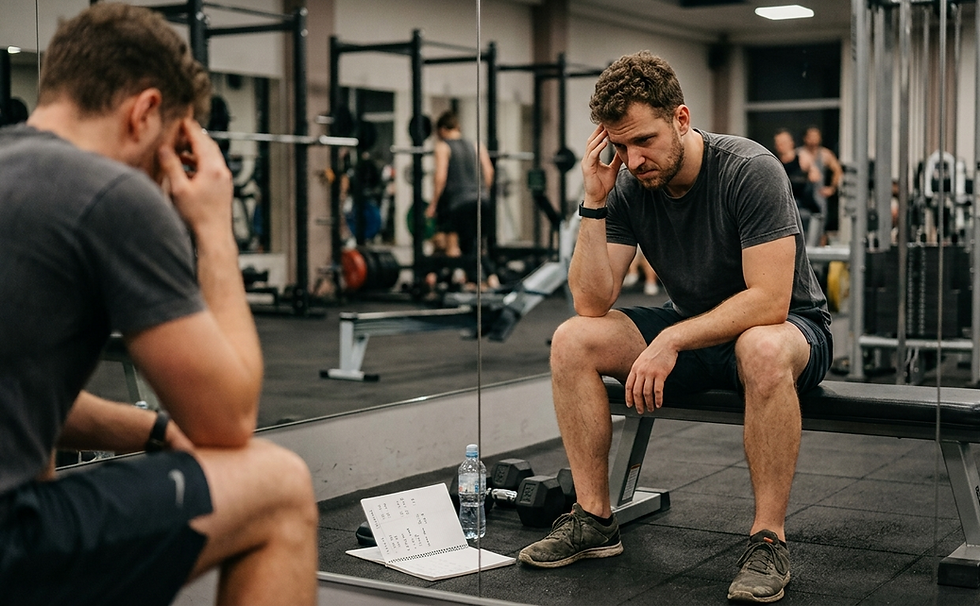
I work with software engineers and tech professionals who come to me burnt out, overweight, and disconnected from their bodies. Not because they're lazy - they're some of the most disciplined people I know. But because they optimized for the wrong things for too long.
The ones who make the shift don't just look better. They report better focus at work. Better sleep. More patience with their families. More confidence in rooms that have nothing to do with fitness.
Being fit is not a vanity project. It's infrastructure.
What This Actually Looks Like
You don't need to gut a house in the countryside to build physical trust with your body.
You need consistency over a long enough time horizon that your body becomes something you rely on - not something you manage around.
For most tech professionals I work with, that starts with:
Two 20 to 30-minute full body sessions per week - no gym required
Understanding nutrition well enough to make better defaults, not follow a strict plan
Building physical awareness gradually, so that capability becomes the baseline, not the exception
The goal isn't to become an athlete.
The goal is to never have to ask yourself "can I physically do this?"
The Real Edge in the Age of AI
Everyone is racing to learn the next tool. That race has no finish line.
Meanwhile, the person who sleeps well, moves well, and shows up with consistent energy every day has an edge that compounds quietly - and that no software update can take away.
In an age where cognitive work is increasingly automated, the humans who win are not the ones who out-compute machines. They're the ones who out-human them.
Being fit is part of that.
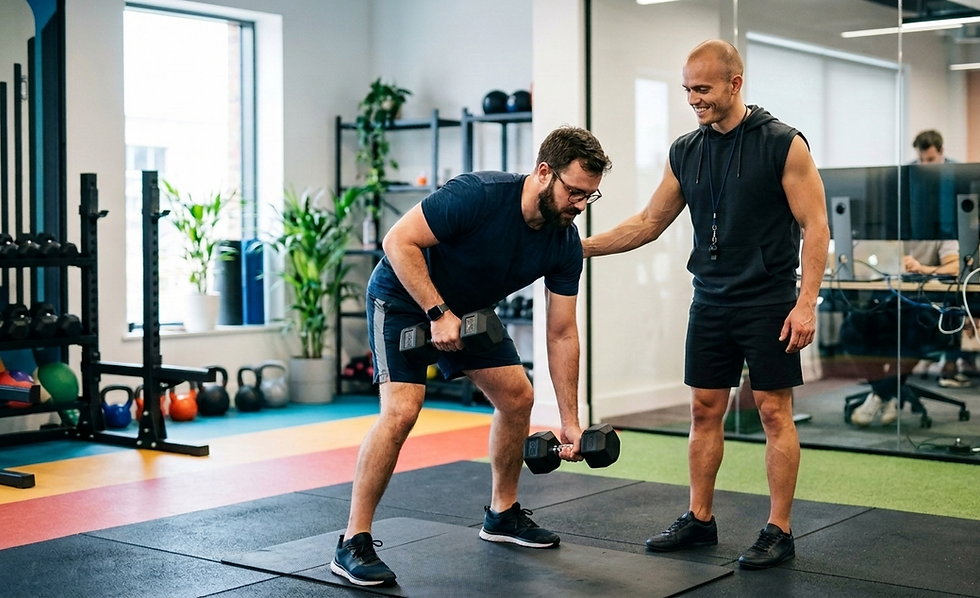
I work with tech professionals 1:1 online - software engineers, developers, and founders who want to build a body they can rely on without sacrificing their career or their time. If this resonated, book a free 30-minute call and let's talk.

Comments