


What Happens When High Performers Treat Fitness Like Another Productivity Hack

Updated: May 13

You've optimized your morning routine. You track your sleep. You batch your meetings, use AI to draft your emails, and have a second brain in Notion. You are, by every reasonable measure, someone who gets things done.
So when you decided to get fit, you approached it the same way you approach everything else: systematically.
You researched the best program. You bought the right equipment. You downloaded the app. You scheduled the workouts in your calendar like any other high-priority task.
And for a few weeks, it worked.
Then a product launch hit. Then the kids got sick. Then Q4 happened. Then you missed a week, felt guilty, tried to make up for it by going too hard, got injured or burnt out, and quietly stopped.
Sound familiar?
This is the trap that catches senior software engineers, entrepreneurs, team leads, and high-performing parents more than almost anyone else. Not because they lack discipline - they have more discipline than most people. But because they made one critical mistake:
They treated fitness like a productivity hack instead of a foundation.
The Productivity Mindset Applied to Fitness
High performers are wired to optimize. It's what makes them exceptional at work. But optimization thinking applied to fitness creates a specific set of problems.
Problem 1: They chase the most efficient protocol.
A senior software engineer approaches fitness the way they'd approach a technical proble - find the best solution, implement it, iterate. So they research. They find the study-backed optimal training frequency, the most effective rep ranges, the perfect macronutrient split. They build a system that is, on paper, flawless.
The problem is that the best program is the one you actually do. Consistently. For years. A "suboptimal" program done with consistency will always outperform the perfect program done intermittently.
Problem 2: They measure the wrong things early.
Entrepreneurs and team leads are metrics-driven. They want to see ROI. But fitness doesn't deliver measurable ROI in the first four weeks - not in ways a spreadsheet can capture. So they feel like the system isn't working, and they look for a better system.
What they don't measure: the fact that they're sleeping slightly better, that their 3pm energy crash is a little less severe, that they walked up the stairs without thinking about it. These are the real early returns. They're just not quantifiable enough to satisfy a data-driven mind.
Problem 3: They treat rest as inefficiency.
High performers are often allergic to doing less. Rest days feel like wasted capacity.
Eating more to support muscle growth feels counterintuitive when the goal is to lose weight. Slowing down to build a habit feels frustratingly slow when you're used to moving fast.
So they push harder than the program requires, under-recover, plateau faster, and burn out sooner.
What Actually Happens to the Body Under This Approach
This isn't just a mindset problem. It has real physical consequences.
When a 38-year-old team lead who works 50-hour weeks, manages a family, and sleeps 6 hours a night adds an aggressive training protocol on top of an already maxed-out stress load - the body doesn't respond the way it would for a 22-year-old with no obligations.
Cortisol is already elevated. Recovery capacity is already compromised. Adding intense physical stress without accounting for total life stress doesn't build fitness - it depletes the system further.
I've worked with senior engineers who came to me exhausted, wondering why their aggressive training program was making them feel worse instead of better. The answer was always the same: they were adding load to a system that was already at capacity.
The solution wasn't a better program. It was a smarter one - shorter sessions, lower intensity, more recovery, and nutrition that supported the body they actually had, not the body of a college athlete.
The Parent Who Has 40 Minutes
Let's talk about the high-performing parent - the one with two kids under seven, a leadership role, a partner who is also building something, and a genuine desire to get fit.
They've tried the 5am workouts. Unsustainable. They've tried the lunch break runs. The meetings always run over. They've tried the weekend sessions. The kids have other plans.
What they haven't tried is accepting that 40 minutes, twice a week, done consistently for 12 months, will produce results that dwarf anything done sporadically for six months at higher volume.
The productivity mindset says: more input, more output. More hours training, more results.
The fitness reality is: minimum effective dose, maximum consistency, compounded over time.
Forty minutes twice a week is 6.7 hours a month. Over a year, that's 80 hours of structured training. Done with progressive overload and reasonable nutrition, that's a completely different body and a completely different baseline of energy and capability.
Most high-performing parents never get there because they keep waiting for a season of life that allows them to do it "properly."
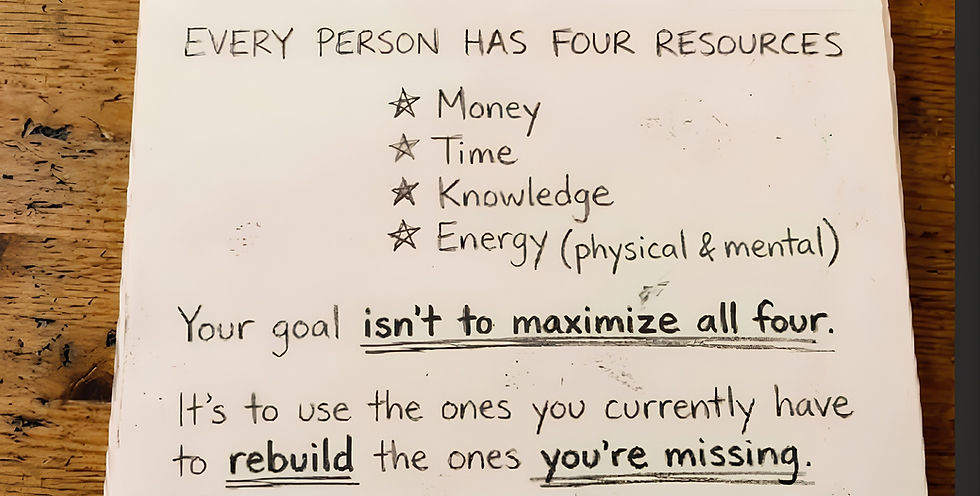
That season doesn't come. Do it with what you have.
The Entrepreneur Who Optimizes Everything Except Recovery
Entrepreneurs are the most interesting case. They understand leverage. They understand compounding. They understand that small consistent inputs produce outsized long-term outputs.
They apply this thinking to their business every day.
Then they treat their body like a machine they can run at 90% capacity indefinitely, fuel with whatever is convenient, and service only when it breaks down.
I've spoken with founders who track their MRR to the dollar but have no idea what they weigh, how they sleep, or when they last moved for more than 20 minutes. They've optimized everything except the hardware running the operation.
The irony is that the return on investment from basic physical health - sleep quality, cognitive performance, stress tolerance, decision-making under pressure - is higher than almost any other input a founder can make. You cannot think clearly when you're chronically under-slept and under-moved. You cannot make good decisions when your nervous system is running on cortisol and caffeine.
Fitness for an entrepreneur isn't a nice-to-have. It's leverage on everything else.
What the Shift Actually Looks Like
The high performers who succeed long-term with fitness share one thing in common: they stop treating it like a project and start treating it like a practice.
A project has a deadline, a deliverable, and an end state. A practice has no end — it just continues, adjusts, and deepens over time.
Concretely, for the people I work with - senior software engineers, entrepreneurs, team leads, high-performing parents - the shift looks like this:
Training becomes non-negotiable but flexible. Two sessions a week, 28-40 minutes, home or gym. If the week is brutal, the sessions get shorter - not skipped. Showing up matters more than intensity.
Nutrition becomes a system of defaults, not rules. No strict diet. Instead, a few high-leverage habits - еnough protein, less alcohol, less mindless snacking - that run in the background without requiring willpower.
Progress is measured in months, not weeks. The question stops being "did I lose weight this week" and starts being "am I more capable than I was three months ago?"
Recovery is treated as training. Sleep, stress management, and rest days are not signs of weakness - they're where adaptation happens.
The Real Cost of Getting This Wrong
Here's what I've seen happen to high performers who never make this shift:
They spend their thirties burning bright and running on adrenaline. In their forties, the deficits accumulate - chronic back pain, metabolic issues, sleep disorders, anxiety that won't respond to the productivity systems they've always relied on. By the time the body sends an unmistakable signal, the hole is deeper and harder to climb out of.
The people who build physical health as a foundation early - not a hack, not a phase, not a project - don't just look better. They perform better, longer. They're sharper at 45 than they were at 38. They have the energy to be present with their families after a full day of high-stakes work. They make better decisions under pressure because their nervous system is regulated, not chronically overloaded.
This is the real ROI. It just doesn't show up in a 30-day progress photo.
One Thing to Change This Week
Not a full program. Not a new system. Just one thing.
Move for 28 minutes, twice this week. Bodyweight. At home. No equipment required. Focus entirely on showing up - not on optimizing.
Do it again next week. That's where it starts.
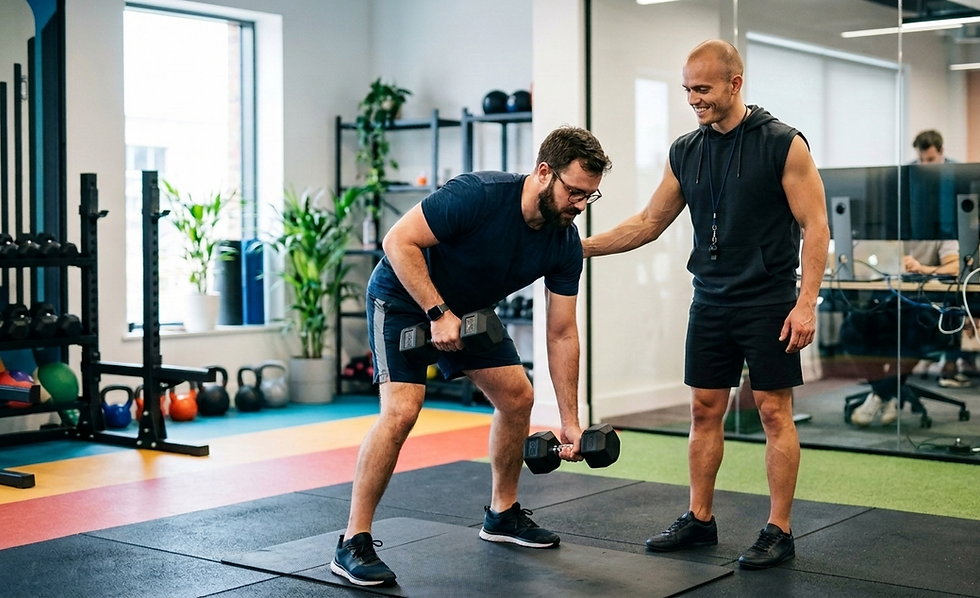
I work 1:1 online with senior software engineers, entrepreneurs, team leads, and high-performing parents who want to build fitness that actually fits their life - without sacrificing performance or family time. Book a free 30-minute call and let's figure out what that looks like for you.


Comments